Home › Common Problems › Garage Door Seal Failure
Garage Door Seal Failure
in Glendale, CA
The rubber weatherstripping around a garage door is the only thing standing between the outside and the inside of your garage. Glendale's dry summers and the hot Santa Ana winds that blow through in fall and winter crack and shrink rubber seals faster than in cooler parts of Southern California. Once the seal is gone, dirt, water, and rodents find their way in, and your garage temperature swings become much wider.
Glendale Garage Door Pros helps Glendale, CA homeowners fix garage door seal failure — call for a free inspection.
Quick Answer
The rubber seal along the bottom and sides of a garage door cracks and shrinks over time, leaving gaps. In Glendale, dry Santa Ana wind conditions dry out rubber seals faster than average, and old seals often fail before the 5-year mark. Replacing the bottom seal and the side weatherstripping is straightforward and closes off those entry points. If water has already gotten in and soaked the floor or wall framing, that needs to be checked too.
Telltale Signs
Warning Signs to Watch For
- A visible gap of light under the closed door from inside the garage
- Leaves, dust, and grit pile up just inside the garage door overnight
- Mouse droppings or signs of rodent entry along the floor near the door
- Water streaks or a wet floor near the door after rain
- The rubber along the bottom is cracked, torn, or missing in sections
- Cold air or strong wind is noticeable inside the garage on windy nights
Root Causes
What Causes Garage Door Seal Failure?
Dry Air and UV Cracking
Glendale averages less than 15 inches of rain per year and sees very low humidity for most of the year. Rubber dries out and cracks in those conditions, especially on doors that face south or west and get baked by direct sun. A seal that looks fine in spring can be cracked and stiff by November.
The Fix
Bottom Seal and Weatherstrip Replacement
The old bottom seal is pulled out of its retainer and a new vinyl or rubber seal is pressed in. Side and top weatherstripping is replaced at the same time since they age at the same rate.
Uneven Driveway or Settled Concrete
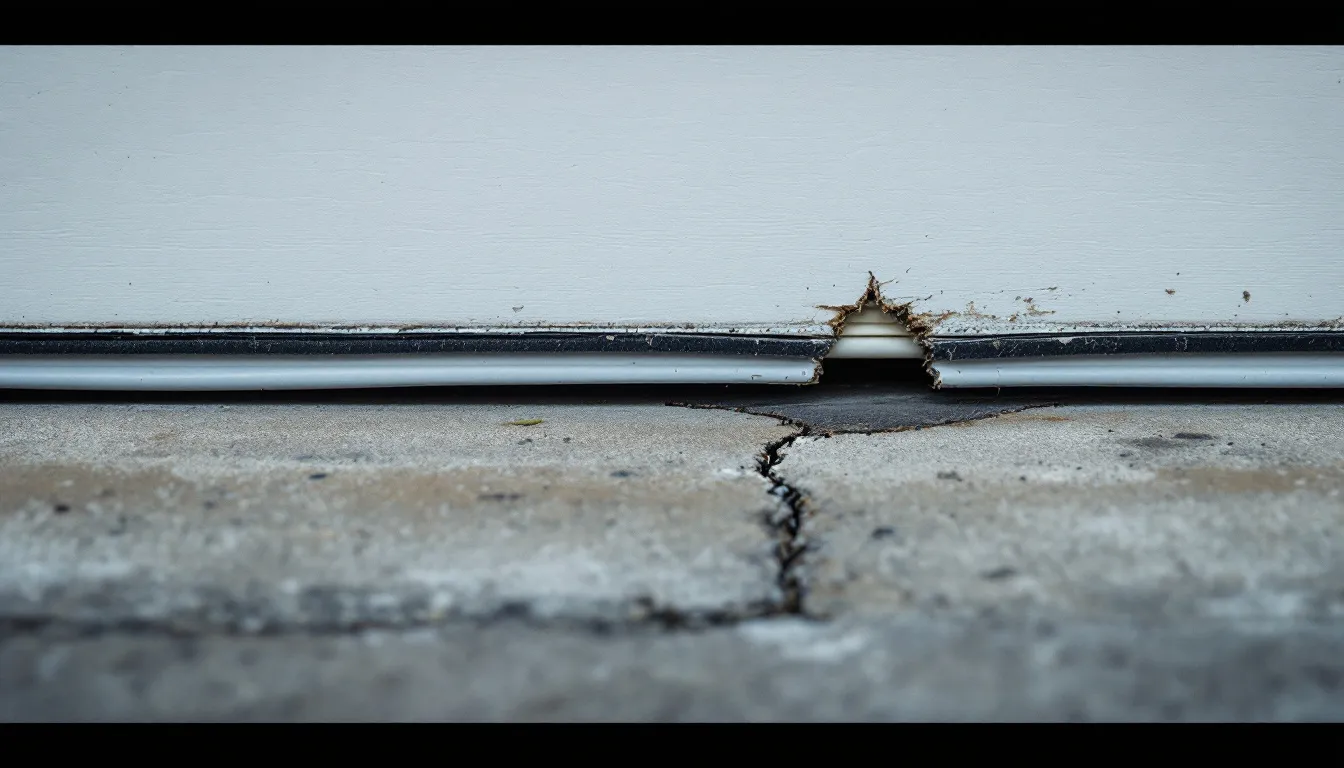
Many Glendale driveways are concrete slabs poured decades ago that have since shifted or cracked unevenly. When the floor is not flat, the bottom seal cannot make full contact across the whole width of the door, leaving gaps even on a brand new seal.
The Fix
Seal Replacement with Bottom Retainer Adjustment
A thicker or more flexible seal profile is used to bridge minor floor gaps. For larger floor irregularities, a bottom retainer with a double-lip seal or a brush seal handles the uneven surface better than a standard T-style seal.
Self-Diagnosis
Which Cause Applies to You?
Check the signs you're observing to narrow down the likely root cause before your inspection.
| What You're Seeing | Dry Air and UV Cracking | Uneven Driveway or Settled Concrete |
|---|---|---|
| Seal is cracked and stiff but the floor under the door is flat | ||
| Gap runs across only part of the door width, not the whole bottom | ||
| New seal was installed but gaps appeared within a year | ||
| Seal is crumbling and dusty, not torn from impact | ||
| Floor has visible cracks or one side is higher than the other |
Free Quote
Get a free quote in Glendale
No obligation — tell us what's going on and we'll text you back shortly.
Other Problems
Services That Fix This
Garage Door Seal Failure Near You
Also Helpful